





What Makes Search Warrants Unconstitutional?

Under most circumstances, federal agents must have a search warrant to legally search a home or business. However, just because a search warrant exists does not mean that it is legally sufficient. Deficient search warrants may result in the exclusion of evidence.
Probable Cause Standard
In order to be valid, a search warrant must be based on “probable cause” for the search. The United States Supreme Court has defined this probable cause standard as “a fair probability that contraband or evidence of a crime will be found in a particular place.” Ornelas v. United States, 517 U.S. 690, 695 (1996). Before a search warrant may be issued, it must be certified by an impartial magistrate. The magistrate must evaluate the facts and circumstances presented by the investigators seeking the warrant and make an independent determination as to whether probable cause exists for the search. The magistrate may not base this determination on information gained from prior illegal searches or information that is outdated. If a warrant is shown to be facially deficient of probable cause or if it can be shown that the magistrate has not acted in a neutral manner with regard to issuing the warrant, the defendant may move to have the warrant deemed invalid.
Put our highly experienced team on your side
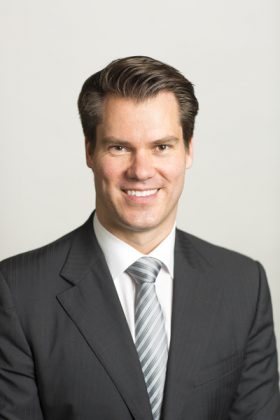
Dr. Nick Oberheiden
Founder
Attorney-at-Law

Lynette S. Byrd
Former DOJ Trial Attorney
Partner

Brian J. Kuester
Former U.S. Attorney

Amanda Marshall
Former U.S. Attorney
Local Counsel

Joe Brown
Former U.S. Attorney
Local Counsel

John W. Sellers
Former Senior DOJ Trial Attorney

Linda Julin McNamara
Federal Appeals Attorney
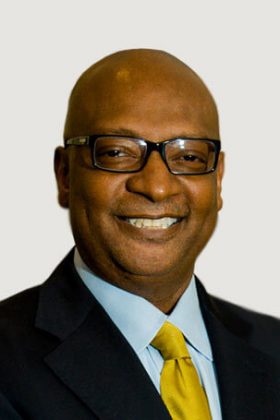
Aaron L. Wiley
Former DOJ attorney
Local Counsel

Roger Bach
Former Special Agent (DOJ)

Chris J. Quick
Former Special Agent (FBI & IRS-CI)

Michael S. Koslow
Former Supervisory Special Agent (DOD-OIG)

Ray Yuen
Former Supervisory Special Agent (FBI)
Particularity Requirement
Search warrants cannot be used to justify “wide-ranging exploratory searches” by law enforcement agencies. Maryland v. Garrison, 480 U.S. 79, 84 (1987). Instead, a search warrant must describe the place to be searched and the items to be seized with particularity. The place of a search is sufficiently defined if the executing agents “can with reasonable effort ascertain and identify the place intended.” Steele v. United States, 267 U.S. 498, 503 (1925). The description of the items to be seized must be detailed enough to “prevent the seizure of one thing under a warrant describing another.” Andresen v. Maryland, 427 U.S. 463, 480 (1976). If a search warrant is overly broad in its descriptions, a defendant may challenge the warrant and seek to have it invalidated.
Scope of a Warrant
The agents executing a warrant may only seize objects that fall within the scope of the search warrant. If a warrant authorizes seizure of specific objects, police may not seize additional, non-specified objects, even if such objects could be evidence of non-related crimes. For example, where police had a warrant to search for evidence related to bomb-making, their seizure of drug paraphernalia during the search was deemed outside the scope of the warrant. United States v. Uzenski, 434 F.3d 690, 706-08 (4th Cir. 2006). Likewise, where police were issued a warrant to search a defendant’s apartment, their search of the defendant’s car, which was located in the apartment building’s common lot, was held to be outside the scope of the search warrant. Mack v. City of Abilene, 461 F.3d 547, 553-54 (5th Cir. 2006).
Exclusionary Rule
Under the exclusionary rule, evidence obtained in violation of a defendant’s constitutional rights may not be used against that defendant as proof of guilt at trial. With regard to search warrants, evidence that was obtained pursuant to invalid search warrants, or that exceeded the scope of valid search warrants, may be excluded from trial upon motion by the defendant. Therefore, if law enforcement agents violate a defendant’s Fourth Amendment rights against improper search and seizure by failing to comply with the restrictions and requirements of executing a valid search warrant, the defendant may be able to have the illegally obtained evidence suppressed.
Experienced Attorneys
Oberheiden, P.C. is a criminal defense firm with headquarters in Dallas, Texas that services clients throughout the United States. Clients seek our services to assist with grand jury investigations, audits, and criminal defense matters. All our clients have direct access to highly experienced attorneys and are not walled off by paralegals, secretaries, or junior lawyers.
Dr. Nick Oberheiden, founder and principal, has represented clients from across the country in government investigations, grand jury proceedings, and as lead criminal defense attorney. Trained at Harvard Law School, UCLA School of Law, and several other institutions of world reputation, Dr. Oberheiden understands what it takes to prevail in complex criminal matters. His practice is limited to federal law, federal criminal law, and government investigations.
Recent Results
The attorneys of Oberheiden, P.C. defend individuals and companies in government investigations and we routinely help clients from across the country with their grand jury subpoenas. With many cases pending, this is our track record:
- Grand Jury InvestigationResult: No criminal prosecution.
- Grand Jury InvestigationResult: No criminal prosecution.
- Grand Jury InvestigationResult: No criminal prosecution.
- Grand Jury InvestigationResult: No criminal prosecution.
- OIG SubpoenaResult: No criminal liability, case dismissed.
- OIG SubpoenaResult: No criminal liability, case dismissed.
- OIG SubpoenaResult: No criminal liability, case dismissed.
Have you been served with a search warrant at your home or business? Call Oberheiden, P.C. today to speak with one of our attorneys about how we may be able to help your case. All consultations are free and confidential.
Oberheiden, P.C.Litigation – Compliance – Defense(214) 469-2171www.healthcare-fraud-defense.comThis information has been prepared for informational purposes only and does not constitute legal advice. This information may constitute attorney advertising in some jurisdictions. Reading of this information does not create an attorney-client relationship. Prior results do not guarantee similar future outcomes. Oberheiden, P.C. is a Texas PC with headquarters in Dallas. Mr. Oberheiden limits his practice to federal law.